
By Jesse Bravo | MktProFin
November 9, 2026
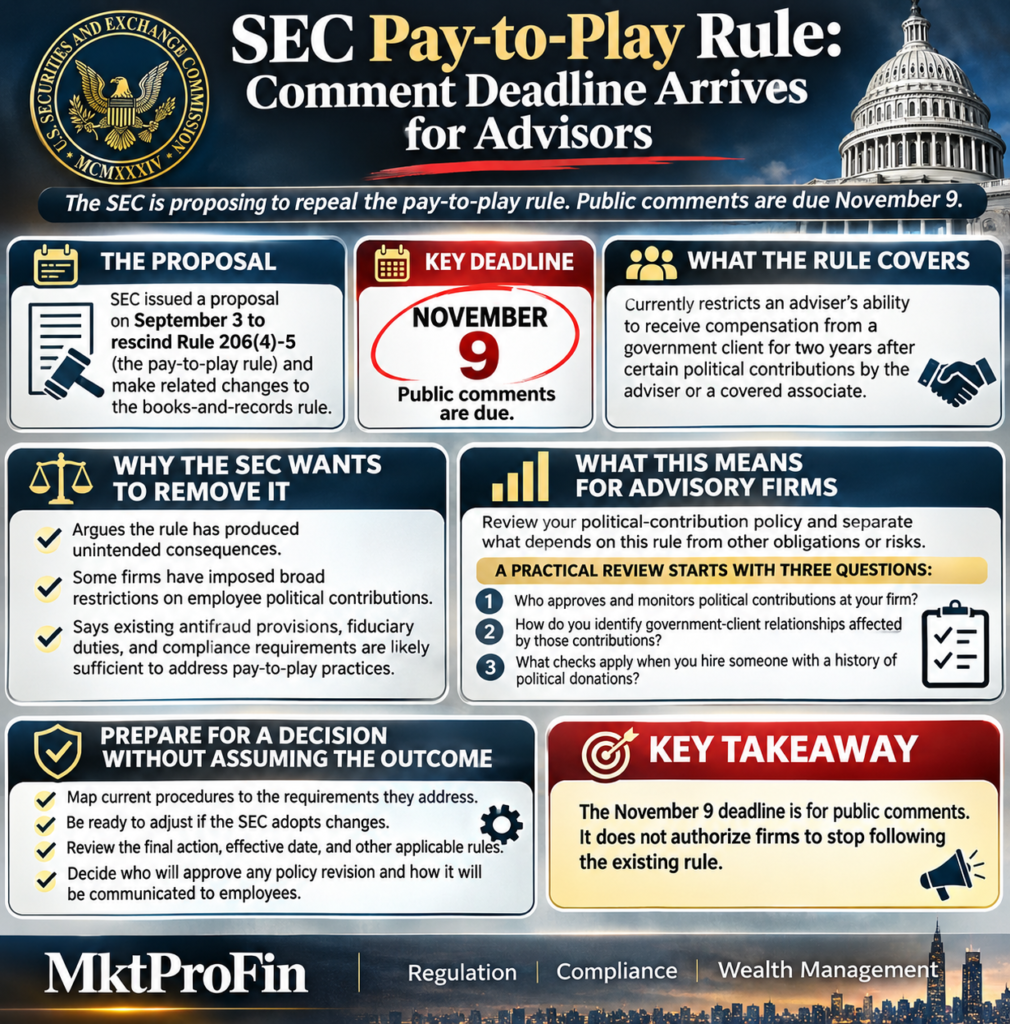
The SEC pay-to-play rule faces a proposed repeal, with public comments due November 9. For advisory firms serving government clients, the immediate task is to understand the proposal and keep existing controls in place.
The SEC issued its proposal on September 3. It would rescind Rule 206(4)-5 and make related changes to the investment-adviser books-and-records rule. The agency still lists the action as proposed. SEC rulemaking record
What the SEC pay-to-play rule covers
The current rule restricts an adviser’s ability to receive compensation from a government client for two years after certain political contributions by the adviser or a covered associate.
That creates a business risk beyond the size of a donation. A contribution can affect a firm’s ability to collect fees from a government relationship. The details of the contributor, recipient, and applicable exceptions matter. Official proposal
Why the SEC wants to remove it
The SEC argues that implementing the rule has produced unintended consequences. Some firms have responded with broad restrictions on employee political contributions.
The agency’s proposal says existing antifraud provisions, fiduciary obligations, and compliance requirements are likely sufficient to address pay-to-play practices. That is the SEC’s stated rationale for the proposal. It is not a finding that conflicts involving political contributions have disappeared. SEC proposal and explanation

What this means for advisory firms
The operational question is straightforward: which parts of your political-contribution policy depend on this rule, and which address other obligations or business risks?
A useful review starts with three questions:
- Who approves and monitors political contributions at your firm?
- How do you identify government-client relationships affected by those contributions?
- What checks apply when you hire someone with a history of political donations?
For example, a firm evaluating a new advisor needs a clear process for reviewing relevant contribution history. A proposed repeal does not settle that review.
Prepare for a decision without assuming the outcome
Compliance teams can map their current procedures to the requirements they address. That gives leadership a practical starting point if the SEC adopts changes.
Any policy revision should follow a review of the final action, its effective date, and other applicable requirements. Firms also need to decide who will approve the revision and explain it to employees.
The November 9 deadline concerns public comments. It does not authorize firms to stop following the existing rule.